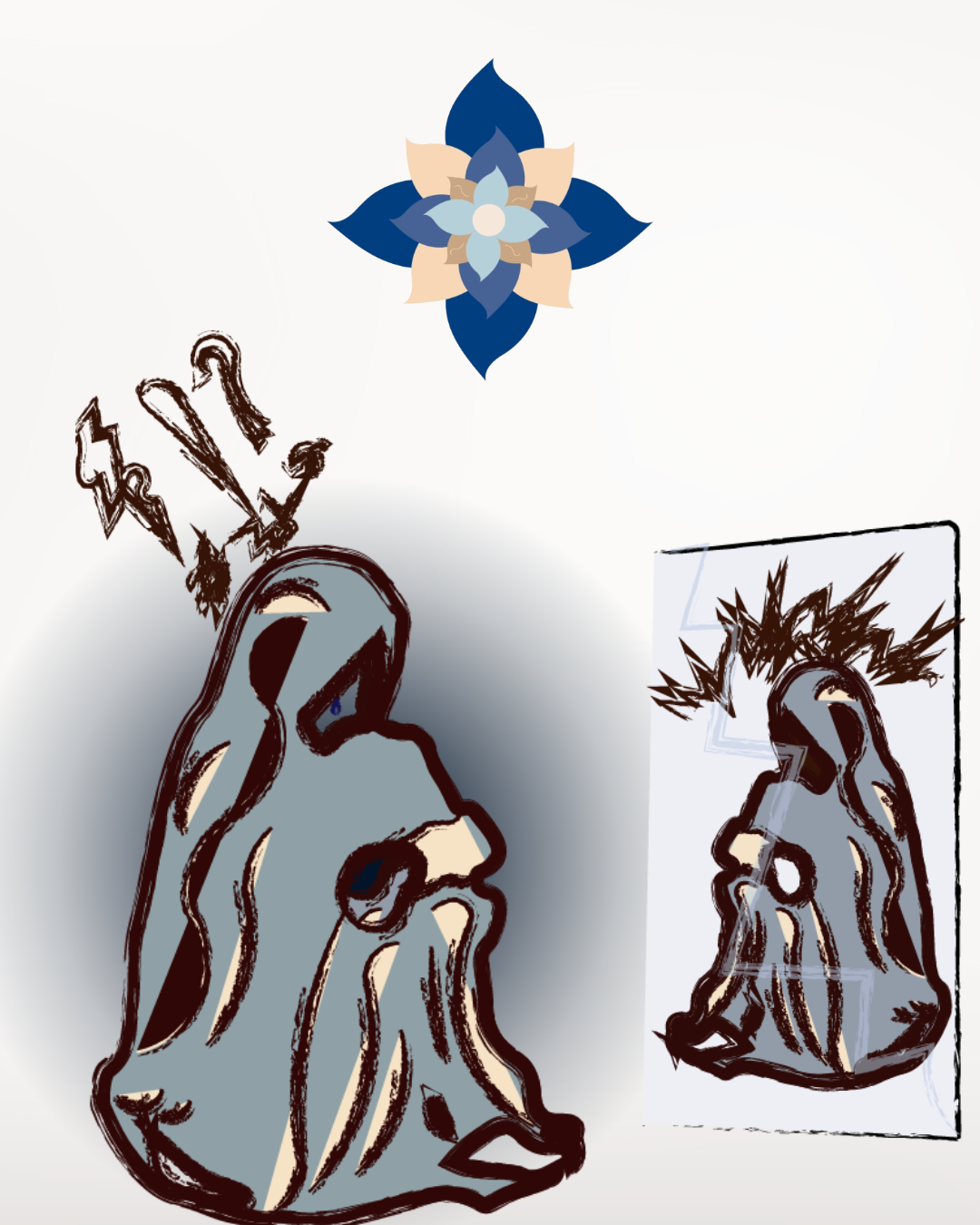
I know my title can be a bit shocking. As pregnancy is a blessing ,no doubt الحمد لله. By the permission of Allah, a woman is entrusted with carrying life, nurturing it, protecting it, and bringing it into this world.
But, what is often missing from the conversation is the reality of what this actually means for a woman, because pregnancy is not just a phase. Birth is not just a moment. And early childhood is not “the beginning,” it is the foundation.
And foundations are not light, they carry everything that comes after them
So let me ask you something…
Did you know that pregnancy, birth, and early childhood are already deeply tied to mental health, for both the child and the mother?
Many people don’t. And it’s not because it’s unimportant, but because it’s rarely explained with the depth it deserves.
So let’s slow this down and understand it properly.
Pregnancy is not only something seen on the outside. It is not only about growth, scans, and waiting. It is a period where a woman is undergoing continuous physical, hormonal, emotional, and mental change, all at once, often quietly.
At the same time, a whole human being is being formed. The baby’s brain is developing rapidly. The nervous system is being shaped. This is a delicate and precise process, one that is often underestimated. Foundations are being laid that can influence health, behaviour, and development far beyond birth.
And this is not happening in isolation.By Allah’s will, the environment the child develops in is closely connected to the state of the mother, her stress, her nourishment, her rest, and her overall well-being.
So why am i saying pregnancy is the beginning of the mental health equation? Well.........
Research has linked high levels of stress, poor nutrition, difficult or traumatic births, and early complications to increased risks in children such as:
• developmental delays • sensory processing difficulties • attention and regulation challenges, including traits associated with ADHD • emotional and behavioural struggles • learning difficulties • increased vulnerability to conditions like Autism Spectrum Disorder in some cases • attachment and bonding challenges • and long-term impacts on mental and nervous system development
This does not mean every difficulty has one clear cause. And it is not about creating fear.
But it does mean that early childhood well being does not start from zero, it continues what has already been laid.
And this is where the conversation often becomes even more incomplete. Because even when people do begin to understand how these early stages may affect a child, they still do not always stop to consider what the very same experiences may be doing to the mother herself. The strain does not pass through her without leaving anything behind. She is living through it too.
It affects her. Deeply. Not always in obvious ways, but also in quiet, accumulating ways that build over time.
Prolonged stress, lack of support, difficult or traumatic birth experiences, physical depletion, and emotional strain have been linked to the following in women:
• postpartum depression and low mood • anxiety and constant internal tension • emotional numbness or detachment • difficulty bonding or feeling present • chronic exhaustion and burnout • nervous system dysregulation • feelings of guilt, overwhelm, or quiet resentment • and in some cases, long-term mental health struggles that continue far beyond the early years
And what many women themselves don’t always realise too is that you do not have to be “falling apart” for something to be wrong.
A woman may not always break down. She may not always cry. She may not always look like she is struggling.
Instead, she continues.
She feeds, she carries, she cleans, she responds, she shows up. She smiles when needed, she stays patient when she can, she pushes through when she has to.
But inside, she may feel stretched thin. She may feel constantly on edge. She may feel like she is giving more than she has, yet still questioning if it is enough.
These are not rare experiences. And they are not signs of weak faith or personal failure.
They are often the result of a woman carrying more than she was supported to carry, while also being expected to do it quietly.
A woman can be functioning, caring, present, and still internally struggling. She can continue showing up while slowly becoming depleted, while losing parts of herself she does not even have time to notice.
And because she is still “managing,” what she is going through is often not taken seriously.
It is overlooked. Minimised. Or simply not seen at all.
And that is part of why maternal mental health cannot be treated as something secondary, because what a woman carries during these stages is not only heavy in the moment, it can continue shaping her long after others assume she is fine.
How vulnerability can begin early
Once we understand that pregnancy, birth, and early childhood are not separate from mental health wellness, we can also begin to understand something else, that vulnerability can begin much earlier than people think.
Not everything begins where it is first noticed. Not every struggle begins when it becomes visible. And not every difficulty appears loudly from the start.
Sometimes the beginning is quieter than that.
Sometimes it begins in pregnancy, while a baby is still being formed and while a mother is already carrying more than most people around her can see. Sometimes it begins in birth, when a difficult labour, oxygen-related stress, or trauma leaves effects that do not end in the delivery room. Sometimes it begins in those earliest stages of life, when both mother and child are still deeply vulnerable and still in need of far more support than they are often given.
This is why these early stages deserve more seriousness than they usually receive.
Premature birth and early developmental vulnerability
One of the clearest examples of early vulnerability can be premature birth. But this needs to be spoken about carefully. An early birth is not automatically anyone’s fault, and it does not mean something will definitely be wrong. Many babies born early do very well, alhamdulillah. At the same time, early birth should not be brushed aside as though it is always small.
Sometimes people respond too quickly with things like, “he was just born early, it’s fine,” or “my relative was early too and nothing was wrong.” But that kind of dismissal misses the point. Common does not mean light. And no two babies are exactly the same. One baby may be born a little early and do very well, while another may be born earlier, smaller, more medically fragile, or under greater strain. Their risks, their needs, and their outcomes are not always the same.
Premature birth itself can happen for different reasons. Sometimes there are known risk factors, and sometimes there is no single clear cause. Infection, carrying twins or more, high blood pressure in pregnancy, poor maternal health, nutritional depletion, chronic stress, difficult living conditions, and previous preterm birth can all increase the risk. And this is important too: these things are not separate from the mother’s well-being. They are often happening while she herself is already carrying strain in her body, mind, and environment.
When birth happens too early, important stages of development may still be underway. The brain may still be in a particularly delicate stage of growth. The lungs may still be immature, which can affect breathing and oxygen stability. Feeding can be more difficult. The body can also be more vulnerable to infection, low birth weight, sensory strain, and other medical complications that place extra pressure on development in those early weeks or months.
Because of this, prematurity has been associated with a greater risk of later developmental and neurological difficulties in some children. These can include motor delays, speech and language delay, learning difficulties, attention problems, sensory difficulties such as vision or hearing issues, global developmental delay, cerebral palsy, and in some cases intellectual disability. Some research has also found links between prematurity and a higher likelihood of autism spectrum traits or ADHD-related difficulties.
But association is not certainty. It does not mean these outcomes will happen. It means early birth can place the body and brain under extra strain during a very sensitive stage, and that deserves to be taken seriously rather than minimized.
Sometimes survival is treated as though it tells the whole story. But survival is not always the whole story. A baby may come home and still need much more support, follow-up, patience, or monitoring than other people realize. And a mother may carry the emotional weight of that experience long after everyone else has moved on.
This is why these conversations need more care and more depth. Not panic. Not blame. Just more honesty, more understanding, and less dismissal.
Birth complications and oxygen-related stress
Birth itself can also be a point at which vulnerability begins or deepens.
When labour becomes prolonged, medically complicated, or distressing for the baby, the developing brain and nervous system can sometimes be affected. Reduced oxygen, cord complications, severe fetal distress, traumatic delivery, or injury around the time of birth can all increase the risk of later developmental difficulty, especially where the brain is involved.
This is one reason why certain birth complications have been linked with concerns such as cerebral palsy, seizures, speech delay, motor difficulties, developmental coordination problems, behavioural challenges, and in some cases intellectual disability.
Of course, not every difficult labour results in long-term harm. But when these complications do happen, their effects can be serious. That is why careful monitoring, good judgment, and responsiveness when something seems wrong matter so much.
It is also why being informed during labour matters. Too often, people describe feeling dismissed, rushed, pressured, or not properly informed when interventions are suggested. Sometimes they are made to feel that asking questions is a problem, or that wanting to understand what is happening makes them difficult. But labour and birth are major events. They deserve clarity, dignity, patience, and care.
And what happens in birth does not affect only the child. A frightening, disempowering, chaotic, or violating birth can also leave emotional marks on the mother that continue long after the baby is born.
Maternal stress during pregnancy is not a small matter
Another early source of vulnerability is maternal stress.
This is one of the most overlooked areas in pregnancy because stress is so often spoken about as though it is just part of life, something to tolerate, hide, or cope through quietly. But chronic stress during pregnancy is not something small. It affects the body, hormones, sleep, appetite, immune function, and emotional state, and it can also affect the environment in which the baby is developing.
Long-term anxiety, depression, trauma, instability, fear, toxic relationships, emotional neglect, lack of support, and unsafe living conditions can all place someone under enormous strain during pregnancy. SubḥanAllah, so much may be carried while calmness, gratitude, and patience are still expected outwardly.
Research has found associations between high maternal stress during pregnancy and later difficulties in children such as emotional sensitivity, behavioural dysregulation, attention problems, sleep difficulties, anxiety-related vulnerability, and learning challenges. Maternal stress has also been associated with a higher risk of premature birth, which can then add another layer of developmental vulnerability.
And again, this does not remain only with the child. Chronic stress can leave the mother depleted, overwhelmed, hypervigilant, emotionally shut down, or mentally exhausted. It can make rest harder, safety harder to feel, and pregnancy harder to experience as something steady or supported.
Nutrition in pregnancy matters more than many realize
Nutrition is another area people often underestimate.
Pregnancy nutrition is not only about eating “enough” in a general sense. It is about whether the body has what it needs to support fetal growth, brain development, and healthy functioning during a very demanding stage.
Certain deficiencies are especially important during pregnancy. Low folate is strongly linked to neural tube defects. Low iodine can affect thyroid function and fetal brain development and has been associated with intellectual impairment in severe cases. Low iron can affect oxygen transport and has been linked to developmental and learning difficulties. Poor vitamin D status has also been studied in relation to later health and developmental concerns. Severe malnutrition or serious nutritional depletion can affect fetal growth more broadly and contribute to low birth weight and developmental vulnerability.
Even when deficiencies are not severe, poor nutrition can still matter, especially when combined with stress, poor sleep, nausea, vomiting, poverty, lack of support, or limited access to proper care.
And again, this is not only about the baby. Nutritional depletion can also affect the mother’s own physical and mental state. It can worsen weakness, exhaustion, brain fog, mood instability, poor recovery, and emotional vulnerability. Sometimes what looks like someone “not taking care of herself properly” is actually the result of being overwhelmed, unsupported, unwell, or carrying too much without enough help.
Infections, fever, and environmental exposures
Some vulnerabilities begin through illness or environmental strain.
Severe infections during pregnancy, especially if untreated, can affect both mother and baby. High fever, particularly in early pregnancy, has been associated in some studies with a greater risk of certain developmental problems or birth complications. Exposure to heavy metals, smoke, air pollution, and other environmental toxins has also been studied for their effects on brain development and child health.
Certain medications may also carry risks in pregnancy depending on the type, timing, and dosage, which is why informed medical guidance matters.
None of this means people should live in fear. But it does mean that pregnancy deserves carefulness, awareness, and protection. It also reminds us that pregnancy is not shaped only by individual choices. Housing matters. Air quality matters. Safety matters. Access to good care matters. The wider environment matters too.
When all of this is looked at together, it becomes easier to see why so much can be missed. A difficult pregnancy may be survived and people assume nothing lasting came from it.
But sometimes the strain continues quietly. Sometimes the effects are not loud at first. Sometimes what is most serious is exactly what people fail to notice because it is hidden under what they call “normal.”
That is one of the great problems here. What is common is often treated as harmless. What is survived is often treated as resolved. What is endured quietly is often treated as though it did not cost much,Allahul Mustaan.
Why awareness in families and communities matters
This is one reason these conversations should never stay limited to mothers alone.
Husbands need this understanding. Fathers need it. Families need it. Communities need it.
Because when people do not understand what pregnancy, birth, and early motherhood can involve, they may speak too lightly, expect too much, minimize too quickly, or fail to notice when someone is carrying more than she can bear alone.
And when they do understand, they are more likely to respond with patience, seriousness, gentleness, and practical support.
Awareness does not solve everything. But it can soften judgment. It can deepen compassion. And it can change the way people respond before things become far worse.
Why generic reassurance is not enough
Another thing that often happens is that reassurance is offered in place of support.
Someone may be told not to worry. To calm down. To trust the process. To rest. To be patient. To stop overthinking.
But reassurance without real support can be painfully empty.
What is often needed is not only comforting words, but actual care. Clear information. Emotional safety. Help with the load. Space to ask questions. Seriousness when something feels wrong. Gentleness instead of dismissal. Presence instead of pressure.
Otherwise reassurance can become just another way of telling someone to carry everything quietly.
Why informed advocacy matters
This is also why informed advocacy matters during pregnancy and birth.
There needs to be room to ask questions, understand what is happening, know why interventions are being suggested, protect the environment where possible, and take seriously the things that do not feel right.
Being informed is not being difficult. Being careful is not being dramatic. Wanting clarity is not a lack of trust.
In sensitive periods like these, awareness is part of care.
The postpartum period matters too
Even after birth, the vulnerable period does not simply end.
The postpartum stage can bring hormonal shifts, physical recovery, pain, feeding challenges, sleep deprivation, emotional overwhelm, and a level of vulnerability many are not prepared for. Some are still recovering from a traumatic labour while also trying to feed a newborn, function on broken sleep, manage expectations, and appear grateful and composed.
This period can be beautiful, but it can also be extremely demanding. And when it is moved through without enough support, the strain can begin to affect not only maternal mental health, but also the emotional climate surrounding the child’s earliest development.
Some experience postpartum anxiety, low mood, intrusive fears, deep irritability, numbness, sadness, or a sense of disconnection that they do not know how to name. Others feel ashamed for struggling because they believe they should simply be grateful. Some are surrounded by people, yet still deeply alone.
Early noticing and early support matter
I am not saying every difficulty can be prevented but we tie our camel and leave the rest to Allah,also not every struggle begins in exactly the same way. But early awareness still matters.
The earlier concerns are noticed, the earlier support can be given, and the more room there is for understanding, care, and wise intervention.
That is true for both mothers and children.
A mother should not have to collapse before anyone takes her distress seriously. A child should not have to struggle visibly for years before someone considers that support may be needed.
Early support does not solve everything, but it can reduce confusion, bring clarity, help families respond more wisely, and create more space for care rather than panic.
Closing reflection
If there is one thing this conversation should leave us with, it is that these stages of life deserve far more care, depth, and seriousness than they are often given.
Pregnancy, birth, early motherhood, and early childhood are not phases to speak about lightly. They are sensitive, formative, and often deeply misunderstood, especially when so much is happening beneath the surface while very little is being named properly.
That is why The Safe Inner Place exists.
This space was created so that women do not have to sit alone with realities that feel heavy, confusing, underexplained, or too easily dismissed. It is here to make room for deeper understanding, more honest conversations, and support that is thoughtful, compassionate, and grounded in both care and truth. It is also aims here to help others understand more clearly, husbands, fathers, families, and communities , so that women are not left carrying so much while the people around them fail to grasp what these stages can truly involve.
Here, we want to encourage earlier awareness, more informed support, gentler care, and more serious attention to what mothers and children may be carrying from the very beginning.
Because what is handled with more wisdom, more mercy, and more understanding early on can make a difference long after those early stages have passedبإذن الله